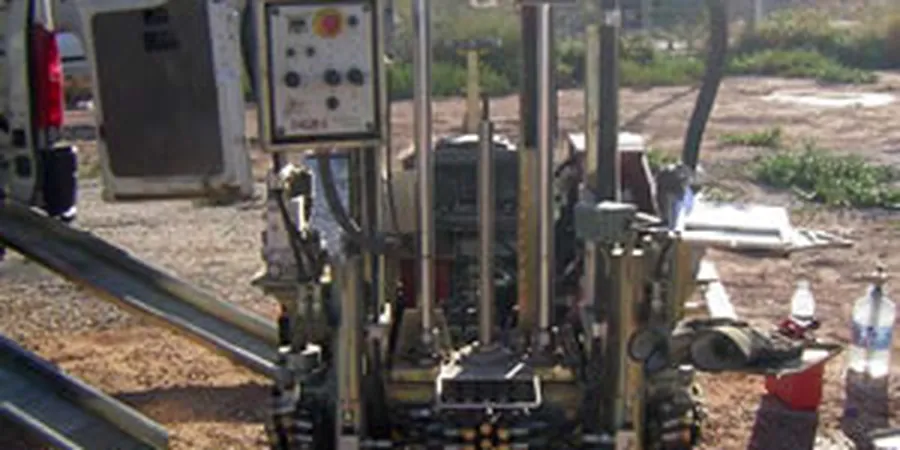
A 14-story hotel tower proposed near the tourist district in Niagara Falls Ontario ran into a classic local problem: highly variable overburden atop karstic bedrock. The geotechnical investigation needed continuous soil profiling without the disturbance inherent in conventional sampling. Our team deployed a 20-tonne CPT rig to push through interbedded glaciolacustrine silts and clays, reaching refusal on dolostone of the Lockport Formation at roughly 22 meters depth. The detailed tip resistance and sleeve friction data mapped a thin, high-risk soft clay lens at 12 meters that a standard SPT grid would almost certainly have missed. For projects in this region, where the Niagara Escarpment creates abrupt transitions in soil stiffness, a deep excavation monitoring program often becomes essential once the CPT reveals challenging subsurface geometry.
A single CPT sounding in Niagara Falls can replace a dozen SPT borings for stratigraphy—continuous data at 2 cm intervals versus 1.5 m grab samples.
Methodology and scope
Local considerations
NBCC 2015 Part 4 and Ontario Regulation 332/12 require site-specific seismic hazard assessment for structures on Site Classes E and F—precisely the conditions found across much of the Niagara Falls area. The regional stratigraphy includes up to 40 meters of soft to firm glaciolacustrine clay overlying erosional bedrock surfaces, making CPT data critical for two reasons. First, the continuous sleeve friction profile allows direct calculation of the cyclic resistance ratio (CRR) for liquefaction triggering analysis without relying on SPT blow counts corrected for energy, rod length, and borehole diameter. Second, the piezocone pore pressure dissipation tests yield in-situ consolidation coefficients (cv) that govern settlement rate predictions under foundation loads. We have observed excess pore pressure ratios (Bq) exceeding 0.6 in sensitive clays near the Niagara River floodplain—soils that exhibit significant strength loss under cyclic loading. Without a CPTu sounding, these layers can be misclassified as competent stiff clay based on visual-manual logging alone, leading to under-designed foundations and costly post-construction settlements.
Applicable standards
ASTM D5778-21 (Standard Test Method for CPT and CPTu), NBCC 2015 Part 4 (Seismic Hazard and Site Classification), ISO 22476-1:2012 (Geotechnical investigation—CPT), NCEER Workshop 1997 (Liquefaction Resistance from CPT)
Associated technical services
CPTu Piezocone Sounding
Continuous penetration testing with pore pressure measurement for Niagara Falls sites. Includes dissipation tests at designated depths to estimate horizontal coefficient of consolidation (ch), essential for predicting settlement rates in the glaciolacustrine clays common throughout the region.
Seismic CPT (SCPTu)
Downhole shear wave velocity measurement integrated into the CPT push. A seismic cone with a triaxial geophone records Vs every 1 m, providing the data required for NBCC Site Class determination (A through E) and liquefaction triggering analysis without a separate MASW or crosshole survey.
Typical parameters
Frequently asked questions
What depth can CPT reach in Niagara Falls Ontario soils?
Typical soundings reach 20 to 35 meters, with refusal occurring on the Lockport dolostone or Queenston Shale bedrock. In areas with dense till overburden near the escarpment, refusal may occur shallower; we use a pre-drilling option through cobble zones when necessary. The 20-tonne push capacity handles the stiff glaciolacustrine clays encountered across the region.
How does CPT compare to SPT for liquefaction assessment?
CPT provides a continuous profile of tip resistance and sleeve friction at 10 mm intervals, eliminating the hammer energy correction, rod length, and sampler disturbance variables inherent in SPT. For Niagara Falls sites with sensitive clays (Bq > 0.6), the piezocone also measures pore pressure response directly, allowing more reliable cyclic resistance ratio calculation per NCEER guidelines than SPT-based methods.
Can CPT identify karstic features in the Niagara Escarpment bedrock?
The cone will detect voids and soft zones within bedrock through abrupt drops in tip resistance, but CPT is not a replacement for rock coring. When the cone encounters a karst cavity, the pore pressure transducer response and sudden loss of resistance provide clear indicators. We typically recommend targeted diamond drilling at any CPT refusal anomalies to confirm rock quality and void geometry.
What does a CPT test cost in the Niagara Region?
For a single CPTu sounding in the Niagara Falls area, pricing generally ranges from CA$200 to CA$310 per meter, depending on depth, access conditions, and whether seismic cone (SCPTu) or dissipation testing is required. Mobilization is quoted separately based on site location and equipment configuration.
Is pore pressure dissipation testing included in standard CPT?
Yes, our CPTu system records dynamic pore pressure during penetration continuously. At designated depths—typically in clay layers where consolidation characteristics are needed—we pause penetration and record the dissipation curve over time. The t50 value from this test yields the in-situ coefficient of consolidation, a parameter used directly in settlement rate calculations for foundations on the compressible glaciolacustrine deposits common throughout Niagara Falls Ontario.